
My Structural Engineer Says I Need Piling – What Happens Next?
Has your structural engineer recommended piling? Find out why it's needed, what happens next and how the right foundation solution keeps your project on track.
Quick answer
If your structural engineer has recommended piling, it doesn't necessarily mean there's a problem with your project. It usually means traditional strip foundations may not provide adequate support for the ground conditions, soil type or structural loads. A specialist piling contractor will review the engineer's design, assess the site and install a suitable piling and foundation system before construction begins.
In this guide you'll learn
- Why your structural engineer has recommended piling
- Whether piling means there's a problem with your project
- What happens after piling has been specified
- What information your piling contractor will need
- How to choose the right piling contractor
Why has my structural engineer recommended piling?
Receiving a structural engineer's report recommending piling can sound alarming, but in reality it is a common outcome for many residential, commercial and self-build projects.
A structural engineer designs foundations that will safely support the proposed building. Their recommendations are based on factors such as:
- Ground investigation reports
- Soil conditions
- Clay, made ground or filled ground
- Tree influence and ground movement
- Building loads
- House extension size
- Existing structures nearby
- Access restrictions
If traditional strip foundations are unlikely to provide adequate support, the engineer may specify mini piling or another specialist piling solution.
Does this mean there's a problem with my site?
Not necessarily.
Many perfectly suitable building plots require piled foundations simply because of the ground conditions beneath the surface.
Piling is often recommended for:
- House extensions
- Self-build homes
- New build properties
- Commercial developments
- Buildings constructed on clay soils
- Sites with made ground
- Restricted access projects
- Areas affected by nearby trees
Rather than seeing piling as a problem, it should be viewed as the correct engineering solution for the site.
What happens after piling has been recommended?
Once your structural engineer has specified piling, the next step is to appoint a specialist piling contractor.
The typical process includes:
- Review the structural engineer's drawings and calculations.
- Assess access to the site.
- Confirm the ground conditions.
- Prepare a quotation.
- Install the piling system.
- Construct RC ground beams or foundation slabs where required.
- Hand the completed foundations back to your builder so construction can continue.
An experienced piling contractor will work closely with your structural engineer to ensure the foundations are installed in accordance with the approved design.
Will I need mini piling?
In many domestic projects, the answer is yes.
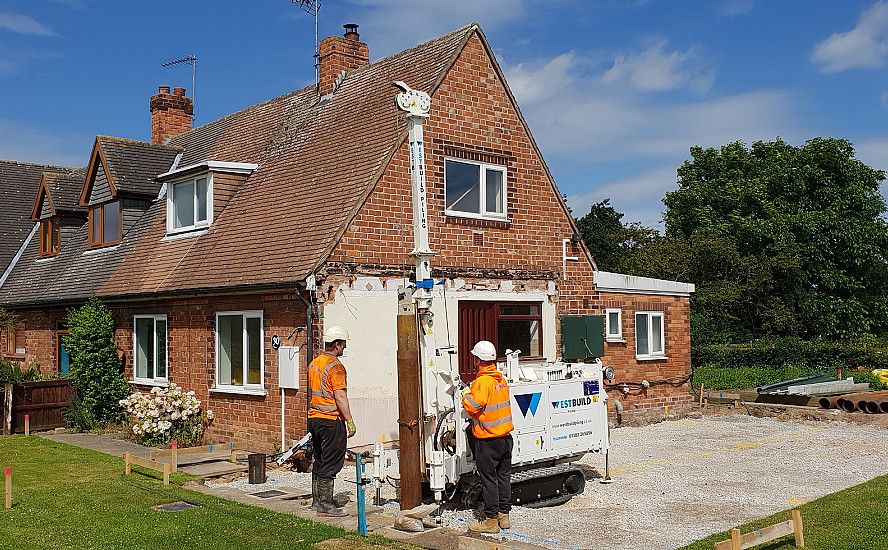
Mini piling is one of the most common solutions for house extensions and residential developments because it can be installed in locations where access is limited and traditional piling equipment cannot operate.
Mini piling also offers an effective solution where poor ground conditions prevent conventional foundations from being used.
However, every project is different. Depending on the engineer's design and site conditions, other piling methods such as steel cased piling or open bore piling may be more appropriate.
What information will a piling contractor need?
To provide an accurate quotation, your piling contractor will normally ask for:
- Structural engineer's drawings
- Foundation design
- Ground investigation report (if available)
- Site address
- Access information
- Proposed construction programme
- Photographs of the site where possible
Providing this information early allows the contractor to recommend the most suitable piling solution and prepare an accurate quotation.
Choosing the right piling contractor
Not all piling contractors offer the same level of experience or accreditation.
When choosing a contractor, look for:
- Experience with similar projects
- Fully trained CSCS accredited operatives
- CPCS certified plant operators
- SSSTS qualified site foremen
- Comprehensive insurance
- Constructionline Silver accreditation
- CHAS Advanced accreditation
- SMAS Worksafe accreditation
- Experience working alongside structural engineers and builders
Selecting an experienced contractor helps ensure your foundations are installed safely, efficiently and in accordance with the engineer's design.
Frequently asked questions
Does piling mean my foundations have failed?
No. Piling is often recommended before construction starts because it is the most suitable foundation solution for the proposed building and ground conditions.
Can I still build my extension?
Yes. In many cases, piling allows an extension to proceed where traditional foundations would not be suitable.
Who decides if piling is required?
The decision is normally made by a structural engineer after reviewing the building design and, where appropriate, a ground investigation report.
How long does piling take?
The installation time depends on the size of the project, access and the piling system being used. Many domestic projects can be completed within a matter of days.
Do I need a ground investigation report?
Not always, but it is often recommended. A ground investigation provides valuable information about soil conditions, helping the structural engineer design the most appropriate foundation system.
Speak to Westbuild Piling
If your structural engineer has recommended piling, our experienced team can review your drawings, discuss your project and provide practical advice on the most appropriate foundation solution. We regularly work alongside homeowners, builders, developers and structural engineers on residential, commercial and industrial projects across the UK.