
How to Choose the Right Piling Contractor for Your Project
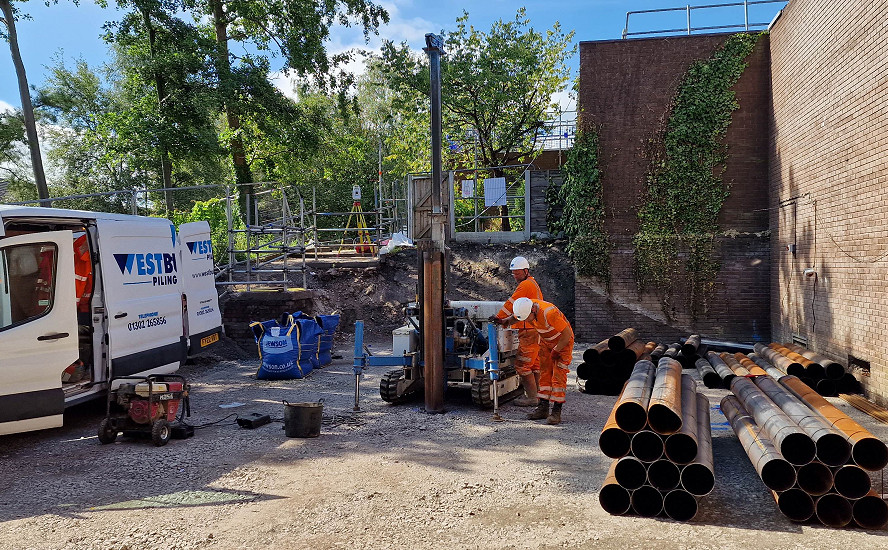
Choosing the right piling contractor can have a major influence on how smoothly a construction project progresses.
Piling is specialist foundation work, often required because conventional shallow foundations are unsuitable for the ground conditions, structural loads or nature of the proposed development. The contractor you appoint therefore needs more than simply access to piling equipment. They need the experience and technical understanding to deliver the right foundation solution for the project.
Whether you are a homeowner planning an extension, a developer constructing new homes, a structural engineer specifying foundations or a main contractor delivering a commercial development, there are several things worth considering before appointing a piling company.
Look for Relevant Piling Experience
Not every piling project is the same.
A contractor experienced primarily in large commercial developments may not necessarily be the best choice for a restricted-access residential extension, while a company concentrating on small domestic projects may not have the resources required for a substantial multi-plot development.
Before appointing a contractor, look for evidence that they have successfully completed projects similar to yours.
This could include:
-
house extensions and residential developments
-
self-build and new-build homes
-
commercial and industrial buildings
-
schools and public-sector developments
-
multi-plot housing schemes
-
projects involving restricted access
-
sites affected by poor or made ground
-
underpinning and foundation strengthening
-
reinforced concrete foundation works
Genuine project case studies are particularly useful because they demonstrate that the piling contractor has actually dealt with the ground conditions, structural requirements and construction challenges being discussed.
Make Sure They Offer the Right Piling System
There is no single piling system that is suitable for every project.
Different ground conditions, structural loads, site access restrictions and neighbouring buildings can all influence the type of piling required.
A specialist piling contractor should be able to explain why a particular system is appropriate rather than simply recommending the same solution for every site.
Westbuild Piling provides several specialist piling services, including:
The correct system should be selected according to the engineering requirements and conditions of the individual project.
Ask Whether the Contractor Can Design as Well as Install
Some piling companies install piles to a design supplied entirely by somebody else. Others can provide a broader design-and-construct service.
Where appropriate, using a contractor that can contribute to the design of the piling or foundation system can simplify the process and help ensure the proposed solution reflects the realities of the site.
The piling contractor may need to consider information including:
-
structural loads
-
ground investigation results
-
soil conditions
-
proposed foundation layout
-
neighbouring structures
-
access for piling equipment
-
working levels
-
pile depth and diameter
-
ground beam requirements
Many of Westbuild's projects involve both the design and construction of specialist piled foundations, allowing the piling solution to be developed around the structural and ground conditions of the project.
Check Their Experience of Working With Structural Engineers
Piling contractors frequently work alongside structural engineers.
In many cases, the engineer will identify that piling is required, provide structural loads or foundation details and work with the piling specialist to develop an appropriate solution.
A contractor that regularly works with structural engineers should understand the information required before piling begins and be comfortable coordinating its work with the wider structural design.
This is particularly important on more complicated projects where the piling, reinforced concrete foundations and building structure need to work together as one system.
Consider the Ground Conditions
One of the most important reasons for using piling is the condition of the ground beneath a development.
Sites may contain:
-
weak or soft soils
-
made ground
-
variable ground conditions
-
shrinkable clay
-
unsuitable fill
-
deeper competent bearing strata
-
previous development or disturbed ground
A good piling contractor should understand how the ground conditions influence the foundation solution.
Where a ground investigation has been undertaken, the information within it can help the contractor determine the likely piling method, pile depth and equipment required.
Where there is uncertainty, the contractor should be prepared to work alongside the structural engineer or geotechnical specialists rather than making assumptions about what lies beneath the site.
Look at the Complete Foundation Solution
Piling is often only one element of the foundation system.
Once the piles are installed, structural loads still need to be transferred from the building into those piles. This is commonly achieved through reinforced concrete ground beams, pile caps or slabs.
Using a contractor that can also provide associated foundation works can make coordination easier.
Westbuild provides reinforced concrete ground beams alongside its piling services, allowing piling and reinforced concrete foundation works to be delivered as part of a coordinated package where required.
Residential and Domestic Piling Requires Different Experience
Homeowners requiring piling are often in a very different position from commercial construction clients.
Piling may only have become necessary after a structural engineer identified poor ground beneath a proposed extension, or after foundation problems were discovered at an existing property.
A residential piling contractor should therefore be comfortable working with homeowners, builders, structural engineers and Building Control.
Access can also be more restricted on residential projects, particularly where equipment needs to operate beside or behind an existing property.
Westbuild provides residential piling for projects including house extensions, new-build homes, self-build developments and other domestic foundation works.
Commercial Piling Contractors Need the Capacity to Deliver
The considerations can be very different on larger developments.
Commercial and industrial piling projects may involve larger quantities of piles, strict construction programmes, multiple trades and more complex site management requirements.
For housebuilders and developers, the piling contractor may also need to deliver foundations across multiple plots rather than a single building.
Westbuild's project experience ranges from individual residential extensions to substantial multi-plot developments and commercial projects, including piling and reinforced concrete foundation packages involving hundreds of piles.
The ability to scale from smaller specialist projects to larger developments can be an important consideration when choosing between piling companies.
Check Health and Safety Credentials
Piling involves specialist plant, heavy equipment and significant construction activity, so health and safety should be an important part of the selection process.
Before appointing a piling contractor, consider their:
-
industry accreditations
-
workforce qualifications
-
plant operator competence
-
site supervision
-
insurance
-
health and safety procedures
-
experience working on managed construction sites
A professional contractor should be able to provide the necessary documentation and demonstrate that its workforce is appropriately trained for the work being undertaken.
Ask for Evidence of Previous Work
Claims on a website are useful, but real projects are much stronger evidence.
Look for case studies showing:
-
what the project involved
-
why piling was required
-
the type and quantity of piles installed
-
pile depths and diameters
-
associated foundation works
-
ground conditions
-
project timescales
-
client or contractor feedback
A good portfolio should show a range of projects rather than the same type of job repeated several times.
Westbuild's Our Work section includes examples of residential, commercial and specialist piling projects completed in a variety of ground conditions and construction environments.
Don't Choose a Piling Contractor on Price Alone
Cost is obviously important, but the lowest quotation is not necessarily the best foundation solution.
Two quotations may appear to cover the same project while including very different assumptions, pile specifications or scopes of work.
When comparing piling quotations, make sure you understand:
-
what piling system is proposed
-
the number and diameter of piles
-
anticipated pile depths
-
whether design is included
-
whether reinforced concrete works are included
-
what information the quotation is based on
-
any exclusions
-
site preparation requirements
-
what happens if ground conditions differ from those expected
A properly considered quotation should make it clear what is being provided.
What Information Does a Piling Contractor Need?
Providing good information at the start can make obtaining an accurate quotation much easier.
Depending on the project, useful information can include:
-
structural drawings
-
foundation layouts
-
structural loads
-
ground investigation reports
-
site plans
-
photographs
-
access dimensions
-
proposed building drawings
-
engineer's recommendations
-
Building Control or warranty requirements
If you don't have all of this information yet, an experienced piling specialist should still be able to explain what is needed before the project can progress.
Questions to Ask Before Appointing a Piling Company
Before making a decision, consider asking:
Have you completed similar projects?
Relevant experience is more useful than simply knowing how long a company has existed.
What piling system would you recommend and why?
The contractor should be able to explain the reasoning behind the proposed solution.
Can you provide design as well as installation?
This may be particularly valuable where the piling solution has not already been fully designed.
Do you work with structural engineers?
Regular collaboration with engineers is an important part of many piling projects.
Can you provide the associated ground beams or foundation works?
A combined package can simplify coordination where reinforced concrete works are also required.
Can I see examples of previous projects?
Case studies, photographs and references provide useful evidence of real experience.
What information do you need before providing a quotation?
A professional contractor should be clear about the information required to price and plan the works properly.
Choosing a Piling Contractor
The right piling contractor should combine technical knowledge, practical experience and the ability to deliver a foundation solution suited to the individual project.
That means looking beyond price and considering the contractor's experience, piling systems, engineering capability, previous projects, workforce competence and ability to work alongside structural engineers and other construction professionals.
Westbuild Piling is a specialist piling contractor providing residential, commercial and industrial piling and foundation solutions throughout the UK.
With more than 45 years of combined industry experience, Westbuild provides specialist piling services including mini piling, steel cased piling, open bore piling and sectional flight auger piling, together with reinforced concrete foundation works.
If you are looking for an experienced piling company for a residential, commercial or industrial project, contact Westbuild Piling to discuss the site, ground conditions and foundation requirements.